Mission. Prayer. Fellowship. Biblical History. Art of Preaching Scholarship. Conclave
Jesus Melchizedek Society
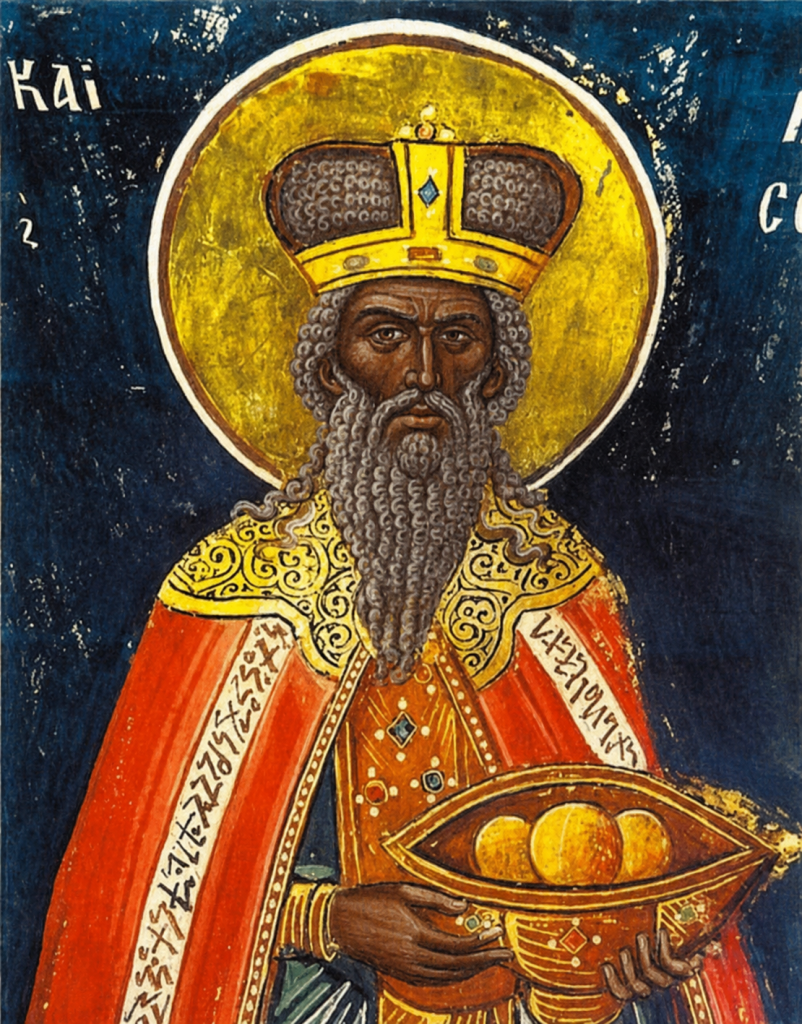
And he says in another place, “You are a priest forever, in the order of Melchizedek.”
Hebrews 5:6
Journeyman
Learned Scholar
Eternal Priesthood
Our Mission
The mission of the Jesus Melchizedek Society (JMS) is to foster fellowship among the brethren through prayer, scholarship, and discussion by uncovering the mysteries of the sacred text— the Holy Bible— to achieve a richer and more powerful understanding of the original intent of the biblical passage or story.
The mysterious life and acts of the Prophet King Melchizedek through the manifestation of our Lord and Savior Jesus Christ and the ushering in of the eternal priesthood is the cornerstone of our pursuit, prayer and fellowship. This society is based upon all of the utterance and life teachings of Almighty God through Christ Jesus. Our eternal aim is to continue the eternal priesthood through the discovery of the unfolding of all the mystery of the sacred text. We will answer through the help of the Holy Spirit what has been hidden and buried in the scriptures. We will also produce groundbreaking scholarship as a result of this pursuit.
The Elements of the Pillars of JMS
- Eternal Priesthood
- Prayer
- Preaching
- Biblical History Content / Context
- Fellowship
- Scholarship
JMS Course Study
- Why is Jesus “First among First”?
- Who was Melchizedek, and why is he important?
- Foundational Books and Texts
- Books on Melchizedek
- National Recognition of your Ministry
- Course Certificate Program
Why is Jesus “First Among First“?
“The scepter will not depart from Judah, nor the ruler’s staff from between his feet, until He comes to whom it belongs and the obedience of the nations is His” (Genesis 49:10).
It is in antiquities that we find the most controversial passages about early Christianity. Josephus mentions John the Baptist. He describes him as a good man who urged the Jews to practice virtue and who was executed by Herod Antipus. Most historians accept this passage as authentic.
Josephus, the Jewish Historian’s First Mention of Jesus Christ
Josephus mentions James, the brother of Jesus, who is called Christ. He describes James’s execution by order of the high priest Ananas. This passage is also widely accepted.
And then there is the testimonium Flavianum book 18 chapter 3 paragraph 3. 63 Greek words that have generated more academic debate than any other text from antiquity.
The problem is obvious. Josephus was a devout Jew. He would never have written he was the Christ. That would be admitting Jesus was the Messiah. He would never have stated the resurrection as fact. He would never have questioned whether Jesus was human.
So what happened? The dominant theory today is partial interpolation. Josephus wrote something about Jesus, probably neutral or slightly negative. Medieval Christian copists in transmitting the text added the most enthusiastic lines. If indeed one ought to call him a man, he was the Christ, the reference to the resurrection.
Evidence supports this theory. An Arabic version of the text discovered in 1971 says he was perhaps the Messiah. More plausible for a Jewish author. A 12th century Syriak version says he was believed to be the Christ. Also more neutral.
In 2025, the scholar TC Schmidt published a bombshell book with Oxford University Press using computational stylistic analysis comparing linguistic patterns in the testimonium with Josephus’s other works. Schmidt argues the passage is substantially authentic. The supposed interpolations are smaller than previously thought.
The debate continues. It will probably never be definitively resolved. But one thing is certain without Josephus we would have no mention of Jesus in non-Christian first century sources none. Tacitus mentions Christ briefly but he wrote decades later ply the younger mentions Christians not Jesus directly is ambiguous. Josephus is the only external witness contemporary or nearly contemporary to the world in which Jesus lived.
His third important work was “Against Apion”, a defense of Judaism against anti-semitic attacks. Apion was an Alexandrian grammarian who spread slanders against the Jews. He claimed they worshiped a donkey’s head in the temple, that they kidnapped Greeks, fattened them for a year, and sacrificed them, eating their entrails, that they were misanthropes who hated all mankind.
Antisemitism is not a modern invention. It was already virulent in the ancient world.
Josephus dismantled each accusation systematically. He cited dozens of Greek and Roman authors as witnesses to Jewish antiquity and dignity. He presented the law of Moses as superior to Greek philosophy. He argued that Jews contributed positively to every society in which they lived.
“Against Apion” is little read today, but it contains some of the most eloquent defenses of Jewish identity ever written.
His final work was the autobiography, a personal defense against criticisms from another Jewish historian named Justice of Tiberius who accused him of having caused the revolt in Galilee.
Josephus died around AD 100. The exact date is unknown. Dissision was assassinated in 96 and with him ended the protection of the Flavian dynasty. Josephus likely did not survive long after that. He died in Rome, far from Jerusalem, far from the ruins of the temple, far from the land where he had been born.
The Jews ignored him for centuries. His name does not appear in the Talmud, the Midrash, or any rabbinic literature of antiquity. The silence was deliberate. He was erased from collective memory.
The Christians, ironically, preserved him. Josephus’s manuscripts survived because medieval monks copied them, interested in the passages about Jesus, John the Baptist, and the context of the New Testament. The church called him a near Christian. Some even called him a saint. Josephus would have found that funny or tragic or both.
2,000 years have passed. The temple remains in ruins. The western wall, a portion of the retaining wall Herod built, is all that remains. Jews from all over the world go there to weep over a loss that happened 20 centuries ago.
Rome fell. The empire fractured. The Flavians turned to dust. But Josephus’ books survived.
And this is where the story gets strange. The man his own countryman called a traitor became, against all odds, the greatest preserver of ancient Jewish memory.
Think about that. Without Josephus, we would know almost nothing about the Pharisees, Sadducees, and Essenes, the groups that shaped Judaism in the time of Jesus. We would not have detailed descriptions of Herod’s temple, its architecture, its rituals, its magnificence. We would not know the political backstage of Roman Judea, the intrigues, the corrupt governors, the crushed revolts.
Without Josephus, Masada would be just a rock in the desert. Herod would be just a name. The great revolt would be a footnote.
And without Josephus, the debate over the historical Jesus would look completely different. When scholars try to reconstruct the world in which Jesus lived, the synagogues of Galilee, the tensions with Rome, the messianic expectations, the conflicts among Jewish sects, they open Josephus. There is no alternative.
When Christian apologists want to prove Jesus existed outside the Gospels, they cite Josephus. It is exhibit number one. When skeptics want to challenge that evidence, they also argue over Josephus. The Testimonium Flavanum is the battlefield.
The traitor became indispensable.
But the irony goes deeper. Modern Israel has a complicated relationship with Josephus. For decades, he was a national villain. The founders of the state of Israel needed heroes. Warriors who fought to the death, who never surrendered, who chose liberty or death. Masada was the perfect symbol. Josephus was the anti- symbol.
In Israeli schools, they held mock trials of Josephus. Students debated traitor or survivor. Most convicted him. Soldiers of the Israel Defense Forces would climb Masada at dawn and swear Masada shall not fall again. The collective suicide was heroism. Josephus’s surrender was shame.
But something changed over the last few decades. Israeli historians began to question the Masada myth. The Sikarai who held the fortress were not exactly heroes. They were terrorists who murdered other Jews for collaborating with Rome. The mass suicide, if it happened, was imposed by leaders on reluctant families. Archaeology does not fully confirm Josephus’s account.
And Josephus, the traitor, began to be re-evaluated. Yes, he surrendered. Yes, he collaborated with Rome, but he also preserved, documented, and bore witness.
Who Was Melchizedek, and Why is He Important?
Melchizedek was a mysterious king of Salem and priest of God Most High who met and blessed Abraham in Genesis 14. He offered bread and wine, received a tenth of Abraham’s spoils, and later foreshadowed the eternal priesthood of Jesus Christ in Psalm 110 and Hebrews 7
First Appearance in Genesis
- King and Priest: Ruled Salem (early Jerusalem) and served as a priest of El Elyon (God Most High) before the formal Israeli priesthood existed.
- Meeting Abraham: Brought bread and wine to refresh Abraham’s troops after a military victory.
- The Blessing: Blessed Abraham, who responded by giving him a tithe (one-tenth) of all plunder.
Meaning of His Name and Title
- King of Righteousness: The literal Hebrew translation of Melchizedek.
- King of Peace: The translation of King of Salem.
Theological Significance
- Order of Melchizedek: Prophesied in Psalm 110:4 as a permanent, non-Levitical royal priesthood.
- Type of Christ: The New Testament book of Hebrews uses Melchizedek’s sudden, seemingly genealogy-free appearance in Genesis to symbolize the eternal, superior priesthood of Jesus Christ.
We will explore:
- The different theological theories about who he actually was (like a pre-incarnate Christ or Shem)
- How Hebrews 7 contrasts his priesthood with Aaron’s
“Any exercise as important as preaching deserves careful and penetrating scrutiny, an endless search for an evaluative instrument, and a strategy for continuous improvement.”
― Samuel DeWitt Proctor, The Certain Sound of the Trumpet: Crafting a Sermon of Authority
Who is eligible to join (By invitation)
You will not be able to apply for membership to this society unless you meet the following basic eligibility. You must be licensed and ordained by a credible church or denomination. Any denomination or church not recognized by the selection committee will not be eligible to proceed. A seminary degree is not required, but helpful. You must meet the criteria of a Bishop, found in the book of Timothy.
This is a scriptural-based organization. You will not be able to apply unless you receive an invitation to do so. The invitation is the beginning of the application process. Recommendations from a Pastor or an organization will not constitute grounds for eligibility.
In 1 Timothy 3:1-7, the Apostle Paul lists the character and lifestyle traits required for a bishop (also translated as overseer or elder). The office requires a person of proven moral character, spiritual maturity, and strong family leadership.

Personal Character
- Above reproach: Blameless in his daily life and conduct.
- Temperate and self-controlled: Sensible, sober-minded, and prudent.
- Respectable: Orderly and of good behavior.
- Hospitable: Welcoming to others.
- Gentle and peaceful: Not violent, not quarrelsome, and not quick-tempered.
- Free from greed: Not a lover of money and not seeking dishonest gain.
- Sober habits: Not a drunkard or given to much wine.
Family and Social Life
- Faithful spouse: Married only once (or faithful to his wife).
- Good household manager: Manages his own family well.
- Respected children: Keep their children submissive and respectful.
- Good reputation: Well thought of by people outside the church.
Spiritual Maturity and Ability
- Apt teacher: Able to teach and hold fast to the true message.
- Not a novice: Must not be a recent convert, to prevent pride
Once accepted, one will go through the following:
- Background Criminal and Character Check
- Orientation
- Organization initial fee and Dues (All payments are final. There will be no refund)
“
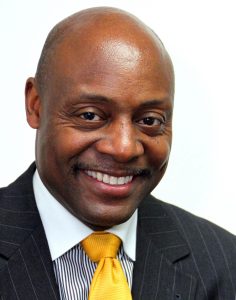
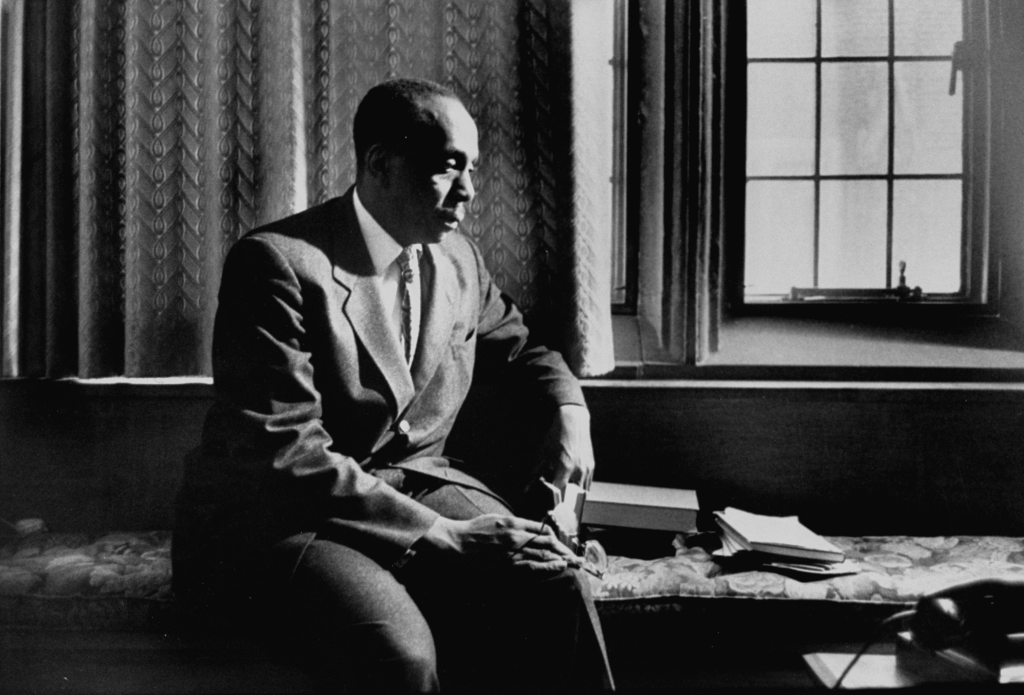
The Right Most
Rev. Anthony Evans
President/Executive Servant Leader
“The mission of the Jesus Melchizedek Society (JMS) is to foster fellowship among the brethren through prayer, scholarship, and discussion by uncovering the mysteries of the sacred text— the Holy Bible— to achieve a richer and more powerful understanding of the original intent of the biblical passage or story.“
Please submit your CV and payment to
Attention: Rev. Anthony Evans
email dcbci2002@gmail.com
Mailing address: P.O. Box 65177
Washington, DC 20035-5177